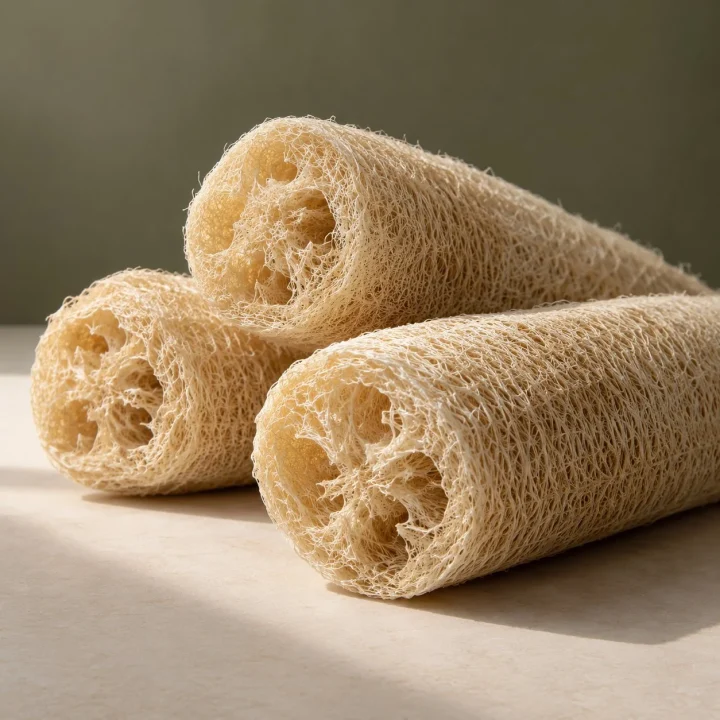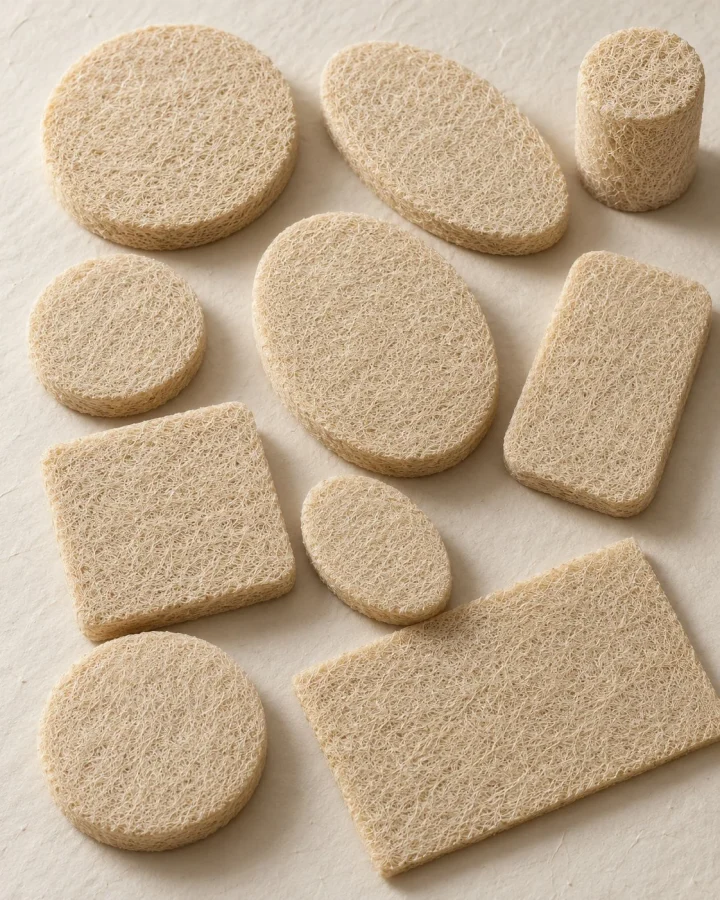
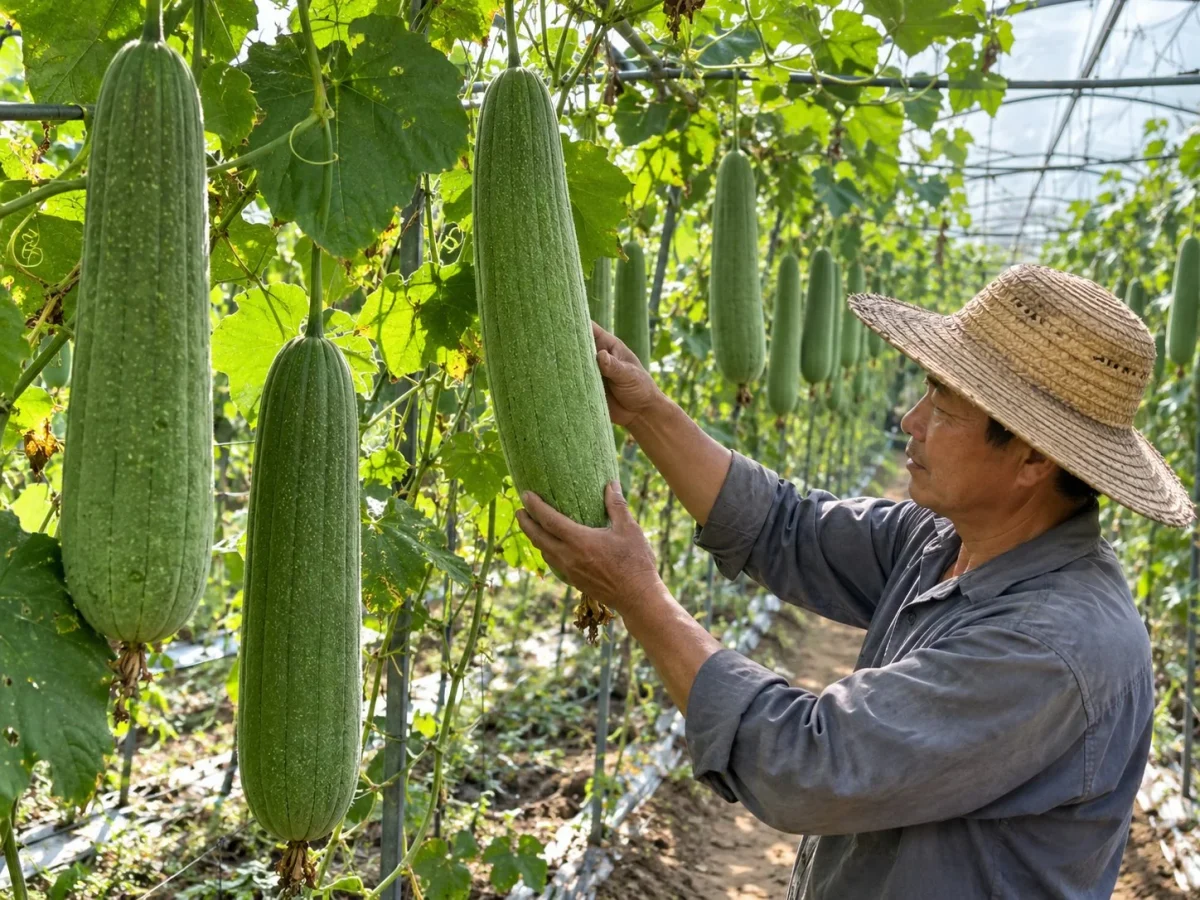
Loofah begins as a climbing plant. When the mature fruit is dried and its outer skin and seeds are removed, a network of plant fibres remains. This structure is the starting point for natural loofah material used in many everyday products.
Look beyond a single material claim
Natural loofah is a plant-derived alternative to some synthetic materials in suitable applications. That does not make every loofah product identical. Growing conditions, preparation, transport, added components and packaging all affect the wider picture. Evaluate the complete product rather than relying on a single green label.
Design the whole product thoughtfully
A simple loofah piece and a loofah item bonded to plastic have different end-of-life considerations. When developing a custom product, discuss threads, backing fabrics, adhesives, handles and labels alongside the loofah itself. Detachable parts can make it easier for users to separate different materials.
Match environmental statements to evidence
Untreated plant fibre can break down under suitable biological conditions, but the conditions and time required vary. Coatings, glues and other components may change that behaviour. A finished product should not be described as certified compostable or suitable for every home compost system without appropriate evidence.
Care is part of the material story
For wet-use products, clear instructions about rinsing, drying and replacement are part of responsible design. Natural loofah is not sterile or self-cleaning. The correct care guidance depends on the final application, and the finished product should be assessed before sale.
We supply semi-finished loofah material for B2B projects. If you are considering a plant-based material for a new range, share the intended use and construction with us. Together we can discuss the material and the additional components your concept needs.